

A boiler pressure gauge rarely gets a second glance until something feels off: a radiator that stays cold, a furnace room that sounds louder than usual, or a utility bill that keeps climbing. That small dial is one of the easiest ways to catch a problem with your heating system before it turns into a full breakdown, as long as you know what the needle is actually telling you.
Understanding the difference between a gauge sitting where it should and one drifting toward trouble is often the first clue that boiler repair is needed, long before anything stops working completely. A quick glance once a week during the heating season is usually all it takes to catch a slow change before it becomes a cold house.
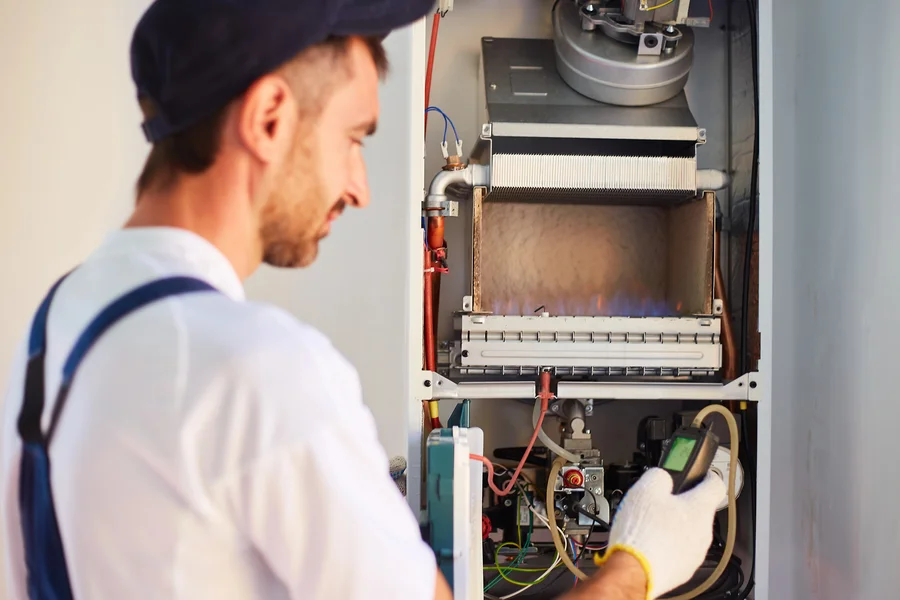
What Counts as Normal Pressure
Most residential hot water boilers are designed to sit at around 12 psi when the system is cold, rising to under 30 psi once the boiler has run and the water inside has heated and expanded.
InspectApedia’s technical reference on hydronic heating systems confirms this range: typical residential boilers run about 12 psi cold and stay under 30 psi once hot, with the pressure relief valve opening above that point. Anything in that range, usually shown in a green zone on the gauge face, is considered normal day-to-day operation.
Homes with multiple floors sometimes run a little higher than average, since it takes more pressure to push hot water up to a second or third story, so context matters as much as the number itself.
When the Needle Sits Too Low
A gauge reading well below 12 psi usually points to one of two things: a leak somewhere in the system, or air that worked its way into the lines after bleeding a radiator. Low pressure matters because it can keep hot water from reaching radiators on upper floors, leaving some rooms noticeably cooler than others.
A pressure-reducing valve is supposed to top the system back up automatically, so a gauge that keeps falling despite that valve usually means a boiler repair is needed to find where the water or the valve itself is failing.
When the Needle Climbs Too High
High pressure is less common but not harmless. A waterlogged expansion tank, a feeder valve that keeps adding water past its normal cutoff, or a closed valve somewhere in the system can all push pressure above the safe range. Over time, that extra strain wears on seals, valves, and joints that were never designed to handle it, which is how a slow pressure creep turns into a sudden leak.
A technician performing boiler repair will usually check the expansion tank first, since a tank that has lost its air cushion is one of the most common causes of pressure creeping upward.
Signs the Pressure Issue Needs a Professional
- The gauge sits at zero or will not move at all
- The needle regularly climbs past 30 psi
- Water drips or weeps from the pressure relief valve
- Pressure keeps changing even when the system is off
Why This Matters for Your Whole System
Pressure problems rarely stay isolated. The U.S. Department of Energy notes that regular maintenance is one of the most effective ways to protect a heating system’s efficiency and lifespan, and that a regularly checked pressure gauge is one of the simplest parts of a seasonal boiler tune-up.
Many homeowners fold a pressure check into their annual maintenance plan rather than waiting to notice a problem on their own. If another company has already diagnosed a pressure issue and you want a second set of eyes before committing to repairs, Summers & Zim’s free second-opinion service covers exactly that.
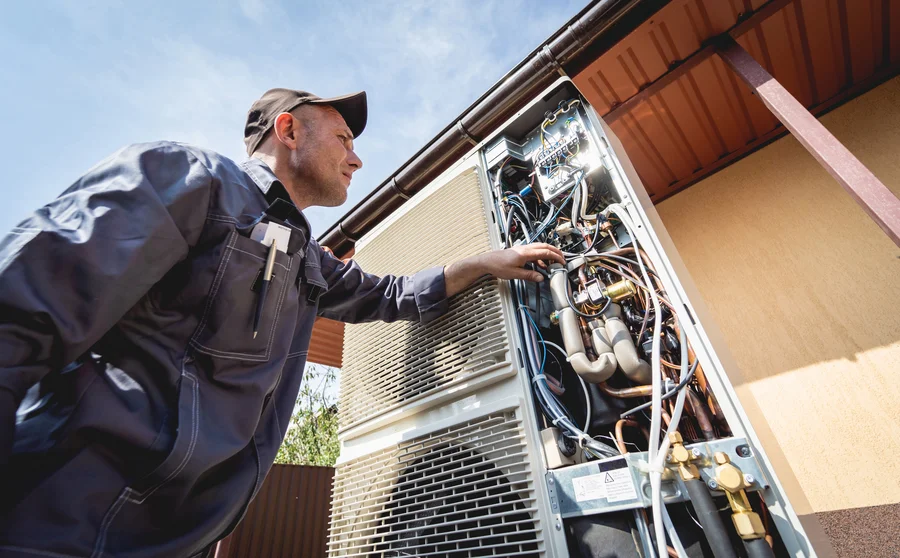
Need Boiler Repair for a Pressure Problem?
A gauge that will not stay in the green zone is worth a closer look before winter puts more demand on your system.
Summers & Zim’s backs every job with our 5-Point Guarantee. If your boiler needs attention, contact us today and let a trained technician confirm whether boiler repair or a simple adjustment will get your pressure back where it belongs.